Retatrutide + vitamin B1 formulation research
Reta-B1™: The Technical Identity of Rethiamine™
Reta-B1™ is the technical identity of Rethiamine™, a proprietary Panacea Bio Chem research formulation containing a 5 mg retatrutide lower layer and a 20 mg thiamine upper layer, co-lyophilised as a dual-layer Peptourbillon™ inside Lyoprester SS™ and reconstituted with 0.5 mL P-EARLs™.
A proprietary Panacea Bio Chem research formulation under development — not an approved medicinal product.
Retatrutide is investigational. Direct retatrutide-induced biochemical depletion of thiamine has not been established; Reta-B1 investigates the indirect nutritional-vulnerability question.
RETA-B1 AT A GLANCE
One formulation. Three identities. One technical record.
Rethiamine™, Reta-B1™ and RetaBone™ are complementary identities for one proprietary Panacea Bio Chem research formulation: 5 mg retatrutide and 20 mg thiamine—vitamin B1—presented as a dual-layer Peptourbillon™ inside the lyophilised chamber of Lyoprester SS™, with a separate 0.5 mL P-EARLs™ reconstitution chamber.
The proposed formulation
- Retatrutide lower layer
- 5 mg
- Thiamine upper layer
- 20 mg thiamine—vitamin B1
- Layer architecture
- Dual-layer Peptourbillon™
- Platform
- Lyoprester SS™ protected single-shot cartridge
- Reconstitution
- 0.5 mL P-EARLs™, activated immediately before use
- Intended final reconstituted volume
- 0.5 mL
- Developer
- Panacea Bio Chem
- Status
- Proprietary research formulation under development
20 mg thiamine—vitamin B1—with the precise pharmaceutical salt and thiamine-equivalent basis to be declared in the final analytical specification.
Reta-B1.com is the technical and evidence identity: it owns the thiamine evidence, the deficiency-mechanism review, the formulation-compatibility questions and the analytical testing programme. For the definitive product presentation, see the Rethiamine retatrutide and thiamine formulation ↗ site; for the body-composition lens, see RetaBone body-composition research ↗.
THE CENTRAL QUESTION
Does retatrutide deplete thiamine?
It has not been established that retatrutide directly depletes thiamine. The more plausible concern is indirect: substantial appetite suppression, reduced food intake, rapid weight loss or prolonged gastrointestinal symptoms may increase the risk of inadequate micronutrient intake in susceptible individuals.
That indirect pathway is no longer speculative. A 60-week randomized trial quantified sustained intake suppression on GLP-1 therapy; two pharmacovigilance analyses and a PRISMA systematic review have documented Wernicke encephalopathy — thiamine-deficiency brain injury — following GLP-1-class treatment for obesity, typically after prolonged vomiting and very rapid weight loss.
Panacea Bio Chem calls this exposure retatrutide-associated nutritional vulnerability — and built the Reta-B1 formulation architecture as the research response to it.
THE VITAMIN
What does thiamine do?
Thiamine — vitamin B1 — is converted in the body into thiamine diphosphate, the active coenzyme form. Through that coenzyme, thiamine participates in cellular energy metabolism, carbohydrate metabolism and amino-acid metabolism, and it supports normal nervous-system function. Several thiamine-dependent enzyme systems sit at the points where food becomes usable cellular energy.
Humans maintain only limited thiamine reserves, so sustained periods of low intake — or persistent vomiting — can exhaust them in weeks. That physiology, not any claimed drug interaction, is the reason thiamine is the micronutrient this formulation is built around.
THE STRENGTH
Why 20 mg?
The proposed 20 mg inclusion is a Panacea Bio Chem formulation-development strength. It is not presented as an established clinical requirement for individuals receiving retatrutide. Its suitability must be determined through dose justification, route-specific safety evaluation and measurements of thiamine status.
The number is a hypothesis with an assay attached: whole-blood thiamine pyrophosphate and erythrocyte transketolase measurements exist precisely so that an inclusion level can be justified — or rejected — on data.
THE RHYTHM
Why weekly?
Retatrutide supplies weekly pharmacological exposure. Reta-B1 investigates whether a thiamine replenishment component can be integrated into the same weekly administration event. It does not yet claim sustained seven-day thiamine release.
The weekly event is the carrier, not the claim: one reconstitution, one injection, and a nutritional component that travels with the pharmacology it is meant to accompany.
THE ENGINEERING PROBLEM
Formulation challenges, stated plainly
Two actives, one cartridge, no premixed liquid. The dual-layer architecture exists because the compatibility problems are real — and each one is a named work package in the development programme, not a solved claim.
Layer formation
Formation of the frozen retatrutide lower layer, and placement and retention of the supercooled thiamine upper layer above it.
Interface integrity
Interlayer migration and interface integrity during freezing, lyophilisation and storage.
Chemical compatibility
pH and pI compatibility, ionic strength and solubility during reconstitution.
Component stability
Peptide stability, thiamine degradation, and oxidation and light sensitivity across manufacture and storage.
Cake structure
Co-lyophilisation behaviour and the physical structure of the dual-layer cake.
Reconstitution
0.5 mL reconstitution time and completeness, particulates, osmolality, local tolerance and post-reconstitution hold time.

Bogdan Dicoias — Panacea Bio Chem Ltd
THE FORMULATION ARCHITECT
Bogdan Dicoias on nutritional architecture and Reta-B1
When a therapy changes appetite, intake and metabolism, nutritional architecture cannot remain an afterthought.
RESEARCH WATCH
Trending Research & News
Last updated: 2026-08-10
2026-07-09
Retatrutide fact check: Has a man died after taking the unapproved weight loss jab?
Unapproved retatrutide safety
BMJ investigates a reported death linked to unapproved (grey-market) retatrutide — the most direct mainstream-media examination of the exact risk class a research-grade retatrutide product sits in. Frames why the site must distinguish research material from clinical product.
News analysis (BMJ)
2026-07-08
Nutritional, functional, and psychological considerations for incretin-based therapies in adults — an EASO, EFAD, and ECPO Consensus Statement
Incretin nutrition consensus
European obesity/dietetics/patient organisations formally recommend micronutrient-risk monitoring during GLP-1/GIP therapy — top-tier support for the site’s core argument that retatrutide-class appetite suppression warrants proactive micronutrient (including thiamine) attention.
Peer-reviewed review
2026-07-03
Wernicke’s Encephalopathy Following Semaglutide Treatment for Obesity: A Systematic PRISMA Review of Case-Based Evidence
Semaglutide Wernicke review
First PRISMA systematic review of Wernicke encephalopathy after semaglutide for obesity (6 cases; poor outcomes including Korsakoff progression and death); recommends vigilance for thiamine deficiency with persistent GI intolerance or rapid weight loss — the exact clinical rationale for co-formulating thiamine.
Peer-reviewed review
Obesity (Silver Spring) (Bidesie J, Oudman E), doi:10.1002/oby.70256 ↗
2026-06-20
Short- and long-term effects of semaglutide 2.4 mg on energy intake, appetite, and food reward: a 60-week, double-blind randomized controlled trial
Sustained intake suppression
60-week RCT evidence that GLP-1 therapy suppresses ad libitum energy intake (~240–290 kcal/day less vs placebo) for the full treatment duration — quantifies the prolonged reduced-intake window during which micronutrient (thiamine) shortfalls can develop.
Peer-reviewed human study
American Journal of Clinical Nutrition (Tronieri JS et al.), doi:10.1016/j.ajcnut.2026.101403 ↗
2026-06-13
Efficacy and safety of retatrutide, a GIP, GLP-1, and glucagon receptor agonist, in people with type 2 diabetes and inadequate glycaemic control with diet and exercise (TRANSCEND-T2D-1): a double-blind, randomised, phase 3 trial
Retatrutide phase 3
First published phase-3 retatrutide trial (537 participants): −11.5% to −15.3% bodyweight at 40 weeks, GI events the most frequent adverse events — anchors the site’s retatrutide efficacy/GI-tolerability context in registrational-quality data.
Peer-reviewed human study
The Lancet (Bajaj HS et al.), 2026;407(10546):2402-2413, doi:10.1016/S0140-6736(26)00967-0 ↗
2026-06-02
Longitudinal 18F-FDG PET Findings in Korsakoff Syndrome After Rapid Weight Loss During Tirzepatide Therapy: A Case Report
Tirzepatide Korsakoff case
Documents irreversible Korsakoff syndrome following rapid weight loss on a dual incretin agonist, with persistent deficits despite IV thiamine; authors explicitly urge nutritional assessment and consideration of thiamine supplementation when initiating these therapies.
Case report
Cureus (Crelier VT et al.), 2026;18(6):e110101, doi:10.7759/cureus.110101 ↗
2026-02-01
Glucagon-like peptide-1 receptor agonists and Wernicke encephalopathy: A pharmacovigilance study and literature review
GLP-1 Wernicke signal
FAERS disproportionality analysis (15 WE cases, mostly semaglutide/tirzepatide; ROR 2.35) plus literature review establishes a quantified pharmacovigilance signal linking GLP-1 RA therapy to thiamine-deficiency encephalopathy.
Observational study
2025-11-26
Neurological complications associated with rapid weight loss and nutritional deficiencies following GLP-1 agonist use: a case report
GLP-1 neuropathy case
37-year-old on semaglutide developed thiamine-deficiency non-alcoholic Wernicke encephalopathy with severe axonal polyneuropathy after rapid weight loss — illustrates combined WE/metabolic neuropathy risk the B1 component addresses.
Case report
BMC Neurology (Zahir A et al.), 2025;26(1):5, doi:10.1186/s12883-025-04540-7 ↗
2026-10-01
The Neurological Impact of Metabolic and Bariatric Surgery: A Systematic Review of Post-Operative Neuropathic and Non-Neuropathic Complications
thiamine & deficiency watch
1. Clin Obes. 2026 Oct;16(5):e70102. doi: 10.1111/cob.70102. The Neurological Impact of Metabolic and Bariatric Surgery: A Systematic Review of Post-Operative Neuropathic and Non-Neuropathic Complications.
Peer-reviewed review
2026-08-06
Thyroid Hormone-Induced Metabolic Stress Unmasking Latent Wernicke Encephalopathy
thiamine & deficiency watch
1. Am J Ther. 2026 Aug 6. doi: 10.1097/MJT.0000000000002154. Online ahead of print. Thyroid Hormone-Induced Metabolic Stress Unmasking Latent Wernicke Encephalopathy. Abdul-Aziz O(1), Lughmani M, Altorok I, Assaly A, Assaly R.
Peer-reviewed study
2026-08-04
Wernicke\\\'s encephalopathy in mixed connective tissue disease triggered by persistent vomiting: a case report and literature review
thiamine & deficiency watch
1. Rheumatol Int. 2026 Aug 4;46(8):226. doi: 10.1007/s00296-026-06246-6. Wernicke\\\'s encephalopathy in mixed connective tissue disease triggered by persistent vomiting: a case report and literature review. Memon SMA(1), Prabhu NR(1), Muniraju T(1), Tejaswi KL(1), Sankaralingam R(2).
Peer-reviewed review
2026-08-01
Development and Genetic Monitoring of a Putatively Thiamine Deficiency Complex Tolerant Atlantic Salmon Broodstock
thiamine & deficiency watch
1. Ecol Evol. 2026 Aug 7;16(8):e74122. doi: 10.1002/ece3.74122. eCollection 2026 Aug. Development and Genetic Monitoring of a Putatively Thiamine Deficiency Complex Tolerant Atlantic Salmon Broodstock.
Peer-reviewed study
THE EVIDENCE LIBRARY
Every reference, with what it does not show
The Reta-B1 research library holds fourteen verified primary references: retatrutide phase 2 and phase 3 trials, the Wernicke-encephalopathy case syntheses and pharmacovigilance analyses, the multi-society nutritional guidance, and the thiamine biomarker literature. Each record states what the study supports, what it does not show, its limitations and its conflicts.
Last evidence search: 2026-08-01 — every entry was re-verified against its canonical source on that date.
THE PANACEA TECHNOLOGY UNIVERSE
Twenty-four technologies, each the leader of its class
Proprietary Panacea Bio Chem Ltd technologies, invented by Bogdan Dicoias — what each one does, and why it leads its class.

Lyoprester®
The only dual-chamber cartridge that is autoreconstitution-enabled, vacuum-sealed and argon-fillback.
Cake and liquid never meet until the moment of use — no contamination, no transfer, no compromise. A conventional vial wets only the surface; the Lyoprester carries Peptourbillon loads approaching 200 mg.
Lyoprester SS: screw a needle, inject, throw.

P-EARLs™
Panacea-Engineered Aseptic Reconstitution Liquid(s) — each tuned to the peptide it wakes.
Bacteriostatic water is a fine diluent and nothing more. A P-EARL is engineered around the peptide’s pI-aggregation behaviour and its Met/Cys/His/Trp oxidation profile.
GHK-Cu: a chelation-withholding liquid design, not generic water.

Peptourbillon™
The layered peptide formulation architecture — single- or multi-layer, never a blend.
Each active keeps its own lyophilised phase: near-eutectic layering, ultrasound freezing, −80 °C stack, RF-assisted drying. Chemistries that would destroy each other in a blend arrive as neighbours, not mixtures.
Dual-layer cakes: one active below, a second above — one chamber, zero contact.
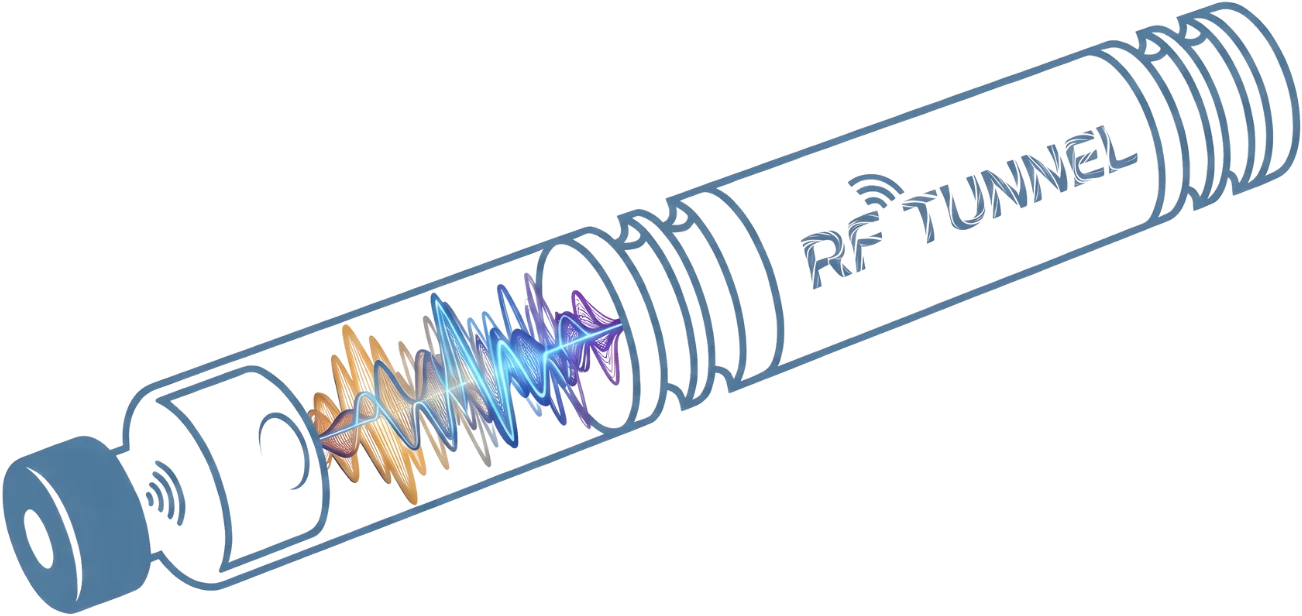
RF Tunnel™
The RF-formed central channel through the cake.
Two wetting fronts instead of one — reconstitution solved by geometry, not surfactants.
The hard cases: heavy-loaded, lipidated (GLP-class) and gel-blocking APIs.

TgShift™
Raises the cake’s glass-transition temperature with RF — instead of chilling below it.
Drying runs warmer and faster while the structure stays below collapse — cycles shorten from days toward hours.
Reference points: trehalose ≈ −29 °C, sucrose ≈ −32 °C — shifted upward, not endured.

Cryolapse™
Cryogenic pressure collapse under S3Pulse™ control — vapour redistributed through the whole cake, not its surface, impeding crust formation.
A collapse, not a yank: vapour redistributes gently through the whole lyocake instead of being driven off its surface, which impedes crust formation. Cryopumping to −110 °C, surfactant-free.
A representative peptide cycle pulled from ~13 hours toward ~4, without a surfactant in sight.

LyoLevit™
The cake levitates and spins in high orbit — driven by ultrasound and RF.
Zero-contact processing: 99% reproducibility, 89% energy reduction, a 4–6× gain in sublimation surface.
No shelf contact means no hot spots — uniformity is the mechanism, not the hope.

Lyochrysalis™
The integrated chamber housing the whole drying stack.
It finishes cold — it never cooks the peptide. No +40/+60 °C secondary bake, so binding affinity and bioavailability survive.
TgShift + LyoLevit + Cryolapse + DiastolVAC + S3Pulse in one housing.

S3Pulse™
The control brain for every piece of Panacea hardware.
Sixteen relay channels, three dipped product probes as the authority, Cryo-Triad event detection and a Kv-learning adaptive ramp — the only platform that enables every other technology.
14,909 automated contract tests stand behind the control law.

Liquiprester™
The single-liquid cartridge engineered so multiple peptide APIs coexist in one shared vehicle.
The glass may vary, the dose must not: a fixed plunger datum with ElimiVoid, bore-variance self-counterbalancing, and IncreSure verification per increment.
Dose accuracy that survives manufacturing tolerance — by design, not inspection.

Syntheseract™
Continuous-flow peptide synthesis in a special, very fast and economical way.
Batch synthesis is “more product, blindly”; Syntheseract is scalable production, observed — 64 positions, 128+ addresses, and a Digital Batch DNA for every run.
Sprint, Economy and Fortress modes — the economics chosen per peptide, not per habit.

CFSPPS™
Continuous-flow solid-phase peptide synthesis, written as its own category.
Setpoint ≠ experience: in flow, every residue addition is observed and repeatable instead of assumed.
The category reference the field reads before arguing.

OxyDeplete™
Degassing plus no-headspace doctrine — the oxygen-starved seal.
Trapped oxygen does not escape, it reacts. Remove it first and stability extends into years instead of months.
Air seal vs oxygen-starved seal: the comparison the oxidation model is built on.

ArgonLock™
The final inert-atmosphere lock under argon.
After drying, the cake is backfilled and sealed under argon — the principle that protects welding arcs, wine cellars and the Charters of Freedom, applied to peptides.
Air vs vacuum-only vs ArgonLock — the three-face comparison, settled.

RedoxVault™
Separation, not merely suppression — redox isolation in lipid micro-reservoirs.
A few ppb of iron can outweigh grams of antioxidant; the vault removes the catalyst from reach, with depot and delayed-release microsphere formats on top.
A strongroom at the scale of a droplet — the ferritin principle, engineered.

PleniDose™
The shared filling gantry — one machine filling both the dual-chamber Lyoprester and the liquid Liquiprester.
Only the rods holder changes between the two product lines; the rear-plunger datum is fixed and pen-compatible. The glass may vary — the dose must not.
Known inside the machine software as the Lyochrysalis Gantry: one gantry, two product lines.

IncreSure™
The dose-metrology layer — verified API per pen increment.
The printed “60 IU” dial figure is not the API in the cartridge and not the volume per click. IncreSure characterises seven real pen parameters instead of trusting the label — a Cryolapse-enabled discipline.
Piston travel per increment: measured, never assumed.

ElimiVoid™
Front-void elimination without touching the metered dose.
It removes the compressible air pocket ahead of the dose — without moving the rear plunger, without withdrawing API, without changing the delivered increment. A Cryolapse-enabled operation.
The completion liquid is API-free, buffer-free and engineered to stay out of the way.

Cryoviscous™
The characterised cold, high-viscosity, low-mobility conditioning state.
The formulation is held temporarily still — strongly flow-restricted — for precision cartridge filling, then recovers within acceptance criteria on controlled warming.
A processing state, not merely “cold liquid”.

Vana Machine™
Vacuum Assisted Needle Accessory — vacuum conditioning and plunger-locking for the cartridge.
It prevents air gaps and plunger drift, landing the target vacuum inside the Lyopresters and keeping it there until the moment of use.
The machine that vacuum-conditions the cartridge before it ever meets a needle.

EZnject™
The disposable auto-injector pen built around the Lyoprester.
One twist activates autoreconstitution — the P-EARLs is drawn into the peptide chamber at the septa. A hundred indexed 0.1 mL doses with lab-grade accuracy; ships with 31G/5 mm needles and a Peptourbillon pre-loaded.
One twist — no vial, no syringe, no transfer.

Dicoias Ψ
The computed-chemistry advisory — every substance reduced to a vector across physical, electronic and formulation space.
Structure-guided descriptors first, laboratory work second: the Ψ advisory ranks excipients, vehicles and layer candidates before the first bench run — the selection layer behind Panacea formulation decisions.
The molecule’s structure reads the shortlist before the bench hears it.

SealoPrester™
Aseptic Cartridge Closure System — Seal o’ Precision + Sterility.
It mechanically seals the caps of vacuum-charged, argon-locked cartridges that arrive held together by vacuum alone — one wrong move and the cartridge self-reconstitutes or loses its atmosphere. In cahoots with VANA, it gives birth to the Lyoprester.
The machine that turns a banal dual-chamber cartridge into a Lyoprester.

Peptidic Liquid
The peptide formulation in solution — the active plus its buffers, cryoprotectants, lyoprotectants and scaffolders.
A peptide is only as good as the liquid it lives in: this is the formulation that decides whether a dose survives freezing, drying, storage and the journey back to solution. Designed with Dicoias Ψ.
The liquid every Lyoprester is born from and every Liquiprester keeps.
THE PANACEA TECHNOLOGY ESTATE
One formulation inside a connected platform estate
Reta-B1™ is developed by Panacea Bio Chem proprietary formulation ↗ research on the Lyoprester SS single-shot platform ↗, and shares its formulation with Rethiamine ↗ and RetaBone ↗.
The technical identity of retatrutide plus vitamin B1.